A Calm Family Setting for Remote Biotherapy: Guidance for Parents and Carers
Practical nonmedical guidance for families arranging remote biotherapy for a child: parental involvement, an age-appropriate explanation, four-evening planning, photograph privacy and boundaries with healthcare.
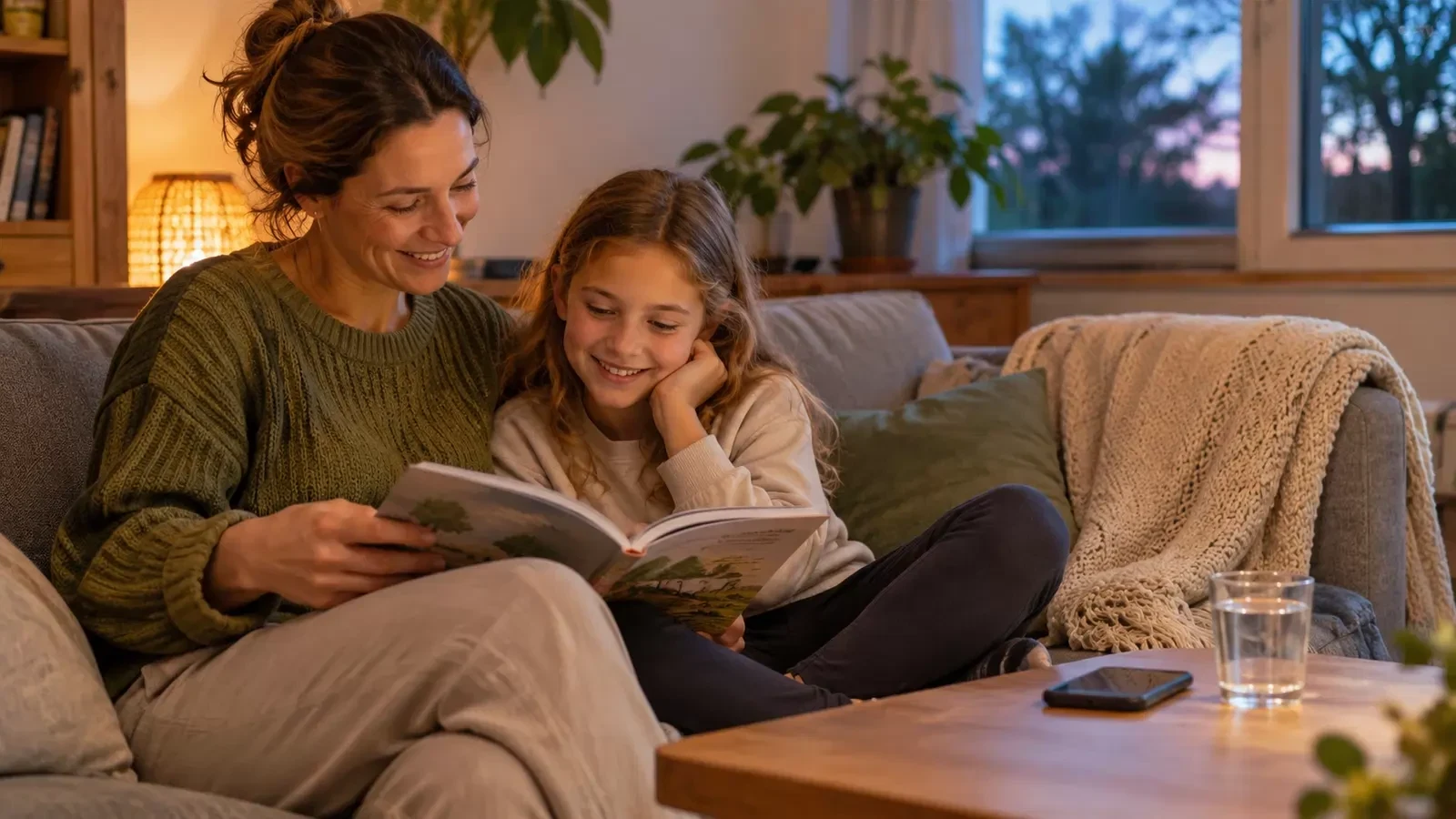
A family does not need to turn its living room into a special treatment space to arrange a remote biotherapy appointment. For a child, the more useful questions are ordinary ones: Who has agreed? Does the child understand what is planned? Is the timing comfortable? What information is being shared? These questions protect the child's privacy and autonomy regardless of how anyone describes a complementary wellness practice.
At BIO-MD, remote appointments ordinarily form a cycle of four sessions on four consecutive days, with brief WhatsApp or Viber text messages before and after each appointment. The practice asks for a recent photograph before the first session. This is its appointment format—not a scientifically proven medical protocol or a reason to interrupt a child's usual care.
Let the parent or guardian arrange the practical details
A parent or legal guardian should make the booking and remain the contact person for a child. BIO-MD's frequently asked questions specifically address parental consent and arranging sessions for another person. Older children can also be included in the explanation in language they can understand. Their comfort, willingness and questions matter; a guardian's administrative permission is not a reason to ignore a child's resistance.
Start with a short, plain explanation: “We have arranged a quiet wellness appointment at home. There is no examination, no equipment, and you do not need to perform or report anything special.” Avoid promises such as “this will make your illness disappear” or “you will feel energy moving.” Such claims could burden a child with an expectation that is not medically established.
A school-age child may wish to read, draw or sit beside a trusted adult. A younger child may prefer to continue an ordinary bedtime routine. If your child is sleeping at the agreed time, ask the practice in advance how the session should be handled rather than waking the child or inventing a requirement to be awake. The family can decide together what feels least disruptive.
A simple plan for four evenings
The BIO-MD session information describes roughly 30 minutes per appointment including the brief text exchange, with evenings at similar times usually preferred. A caregiver can prepare without treating the schedule as inflexible:
- Before day one: Confirm all four dates, the time zone, the contact number and which adult will respond to messages. Clarify the photograph request and privacy information before sending anything.
- Each evening: Choose a familiar, comfortable part of the home. Put aside enough time for the text exchange and normal family interruptions. Keep the adult's phone nearby, not a device in the child's hands.
- If routines change: Let the practitioner know. Homework, a tired child, bedtime or an unexpected family need are valid reasons to clarify or rearrange a practical plan.
- After day four: Confirm the cycle is finished. If you keep personal notes, record ordinary facts or the child's own words without labelling them as a diagnosis or proof that a health condition improved.
The four-day sequence is the practice's organisational convention. It is not evidence that four sessions have a special physiological effect.
Treat a child's photograph as private information
A recent photograph may be requested for the practice's distance-session workflow. That does not make it publicly shareable or give blanket permission for reuse. Before transferring an image, ask who will access it, its purpose, its retention period, whether it will be copied into other systems, and how to request deletion where applicable.
Send any image only via an agreed private communication channel. Avoid including other children, identifying school information, addresses, or visible documents in the background. A simple, recent and appropriate photograph may be sufficient; the practice should clarify its requirements rather than expecting a family to guess. If the caregiver is uncomfortable sending an image, discuss that before booking, and do not treat privacy hesitation as a lack of commitment.
The European Commission notes that children have specific personal-data safeguards and that some consent rules depend on national law and on the legal basis for processing. Do not assume a universal age at which every child can consent alone. Families should receive clear information appropriate to their situation, including how data is processed and whom to contact with questions.
What the child may experience—and what not to infer
A quiet half-hour at home could be relaxing, boring, distracting or uneventful. A child might ask questions, move around or notice nothing. None of those responses is a test of cooperation. There is no validated sign—warmth, tingling, sleepiness or silence—that proves remote biotherapy has changed a child's health or that a practitioner can measure an unseen field.
Adults should avoid repeatedly asking “Do you feel better now?” or searching for confirmation after every appointment. A neutral question such as “Was that comfortable for you?” is less leading. If the child wants to stop, listen and communicate that choice. There should be no need for forced stillness, breathing exercises, unusual diets, supplements or rituals.
Keep healthcare decisions separate
Biotherapy is presented here as a nonmedical complementary wellness practice. BIO-MD does not diagnose a child or replace paediatric evaluation, prescribed treatment, monitoring or emergency care. The US National Center for Complementary and Integrative Health advises families not to substitute unproven approaches for established care or delay obtaining professional help.
If a child has symptoms, a known condition, or a new change that concerns you, involve the child's usual healthcare professional. You can mention complementary wellness arrangements so the professional understands the wider context. Do not change medicines or care plans on the basis of a biotherapy appointment or personal impressions during it.
For the broader appointment format see preparing for a remote session and planning four consecutive evenings. The practical aim of a family arrangement is to make consent, privacy and comfort clear—not to promise a medical result.
*Editorial note, 5 November 2026: The cover is an original illustrative home scene and does not depict a real BIO-MD client or appointment.*
Biotherapy is complementary support. It does not diagnose illness and does not replace medical advice, medication, examinations or emergency care.
Sources
- Therapy — Distance and live biotherapy
- Frequently asked questions
- Children and the Use of Complementary Health Approaches
- Are there any specific safeguards for data about children?
- Information for individuals — GDPR rights