Four Evenings, One Simple Routine: Planning a Remote Biotherapy Cycle
A practical guide to BIO-MD's four consecutive remote biotherapy evenings: timing, quiet space, text contact, privacy, personal notes and nonmedical boundaries.
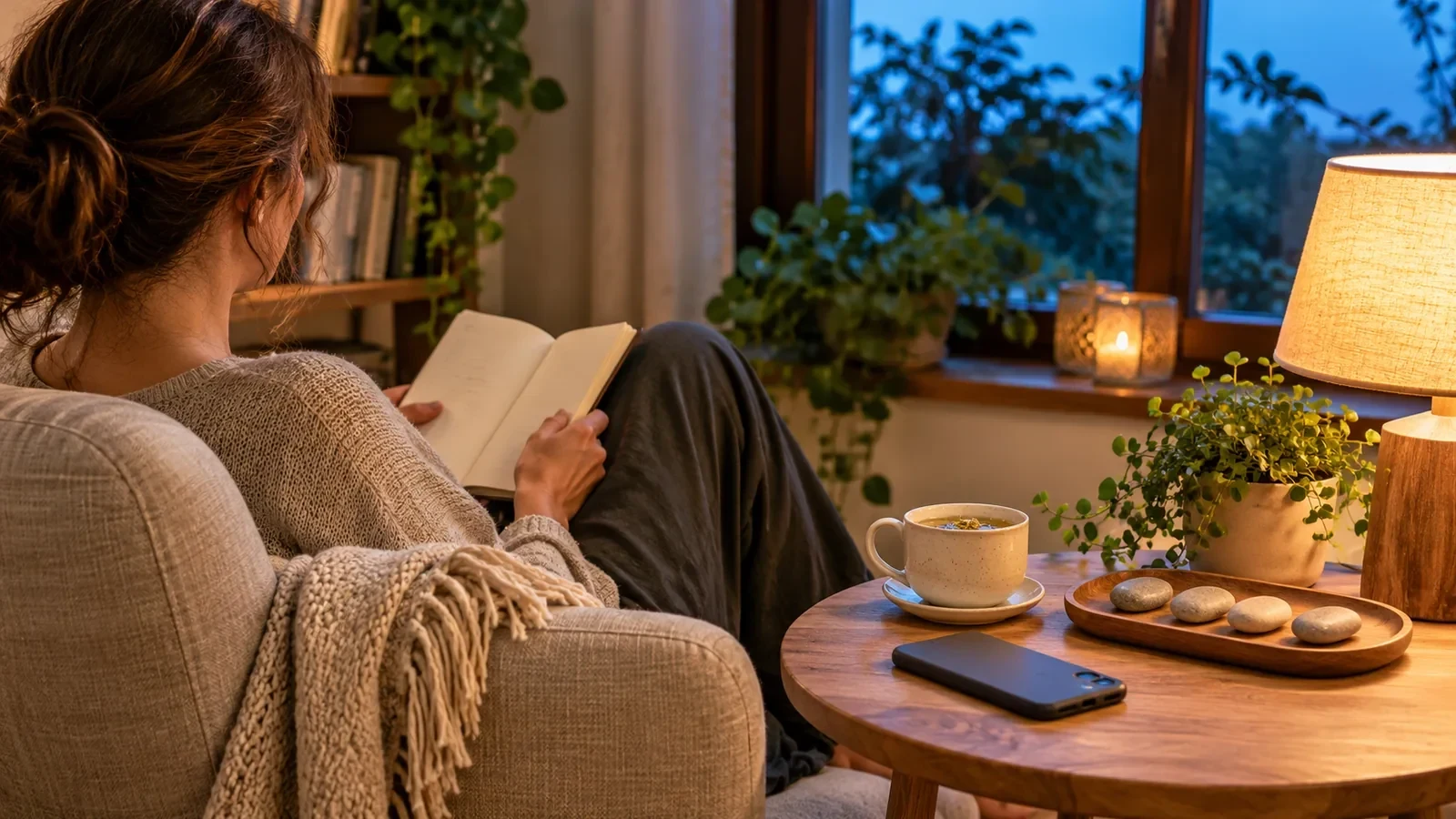
A remote biotherapy appointment can be made more comfortable by paying attention to ordinary details: a reliable time, a quiet corner, clear messages and enough space in the evening. For BIO-MD, the usual format is four sessions on four consecutive days. This is the way the practice organises its appointments, not a scientifically established treatment schedule or a promise of health improvement.
This guide looks beyond preparing for a single appointment. It explains how to organise the *whole four-evening sequence* without turning an optional wellness practice into an obligation or another source of stress.
Start with the four-day calendar
When requesting a cycle, choose four consecutive dates when you can usually be at home or somewhere calm. BIO-MD's session information describes a remote appointment as taking about 30 minutes overall, including a brief exchange before and after. The practitioner normally recommends evenings at roughly the same time, but the actual start times must be confirmed rather than assumed.
If you and the practitioner are in different countries, write out the time with the date and time zone. “10 p.m.” alone is easy to misunderstand when clocks change or when someone is travelling. Keep the confirmation somewhere accessible, and check the first appointment before arranging the remaining evenings.
A practical rhythm might be to clear a half-hour in the calendar plus a little extra margin. This is a scheduling suggestion, not a required breathing, fasting or rest protocol. There is no need to rearrange ordinary work or family life more than reasonably necessary.
Prepare the communication before the first evening
BIO-MD uses short text messages via WhatsApp or Viber during remote cycles, rather than a continuous voice or video call. Confirm which channel you will use, make sure the contact is saved, and send the requested introductory message ahead of time. The practice also asks for a recent photograph before the first session.
A photograph and personal messages can be identifying information. Before sending them, you may ask how they are used, who can see them, how long they are retained and how you can exercise your data rights. The European Commission explains that people must receive clear information about the purpose and retention of personal-data processing. You should never feel obliged to share more information than is relevant to the arrangement.
If your phone is normally on silent, set it so you can notice the brief opening message while keeping other notifications muted. A delayed reply need not become a crisis; it is better to agree in advance how to handle interruptions.
Four evenings, one predictable routine
Evening 1 — get oriented. Choose a comfortable seat or a place to lie down, make sure the room temperature suits you and confirm that you can receive the opening message. This is an opportunity to ask practical questions about timing and communication. It does not require a special ritual or an unusual state of mind.
Evening 2 — keep it straightforward. Use the same simple arrangement if it worked. If your schedule, internet connection or surroundings have changed, notify the practitioner rather than pretending the original arrangement still fits. There is no reason to interpret ordinary tiredness or a restless day as evidence that a particular wellness process has succeeded or failed.
Evening 3 — allow normal variation. One day may feel peaceful and another distracting. Some people describe sensations; others notice nothing in particular. Either experience can be reported in your own words, without giving it a diagnosis or claiming it measures a biological energy field. A brief note such as “comfortable,” “distracted” or “would prefer an earlier start” may be more useful than a lengthy interpretation.
Evening 4 — close the practical loop. Confirm that the fourth appointment has ended, ask any remaining questions about the arrangement and decide whether you wish to keep a personal note of the experience. There is no need to promise results, arrange additional appointments automatically or look for a particular physical reaction. Continuing any nonmedical wellness activity should remain your own choice.
Keep the setting ordinary and comfortable
A quiet room is helpful primarily because it reduces distractions. Comfortable clothes, a chair with enough support, a blanket if you are cold, and a glass of water nearby are reasonable conveniences. You do not need special equipment, candles, an incense burner or a dedicated “treatment room.” The cover illustration for this article shows an ordinary home evening, not an actual BIO-MD appointment.
If you want to use soft music, keep it at a level that lets you notice incoming messages. Do not force deep breathing, prolonged breath-holding or uncomfortable positions. Relaxation exercises have their own research base, but that research does not prove that remote biotherapy treats any disease.
If you are caring for a child or sharing a home, agree on a realistic degree of quiet. A short interruption or a need to attend to family responsibilities is a practical scheduling matter. For minors, any participation and sharing of their personal information require appropriate parental or guardian involvement.
Observe without turning observations into diagnoses
You may find it useful to note the date, whether the appointment happened as agreed and one or two personal impressions. Distinguish what you noticed from what you think it means. For example, “I slept longer on Thursday” is an observation; “the sessions corrected my sleep disorder” would be a causal conclusion unsupported by that one observation.
Day-to-day changes can have many explanations, including ordinary variation, expectations, workload and other activities. There is no validated rule that a sensation, a lack of sensation or a particular four-day pattern demonstrates that biotherapy has produced a clinical effect.
The simple personal reflection guide offers a more detailed, nonmedical way to keep those distinctions clear. You can also review the single-session remote preparation guide if you are new to the format.
Changes of plan and genuine health concerns
If you cannot attend one evening, contact the practitioner promptly and agree on how to proceed; do not assume that an interrupted sequence needs to be restarted or intensified. The BIO-MD FAQ asks participants to give advance notice for rescheduling where possible.
BIO-MD is a biotherapy and wellness practice, not a medical practice. Its four consecutive appointments are a service convention rather than a medically established dosage. The practice does not diagnose illness, prescribe medication or replace professional examinations and treatment. The U.S. National Center for Complementary and Integrative Health advises against using an unproven complementary approach to postpone medical care. If symptoms appear, worsen or cause concern, seek appropriate qualified care rather than waiting for a wellness cycle to finish.
The most useful four-evening plan is the one that is clear, voluntary and manageable. Confirm the dates, choose a comfortable routine, communicate plainly and keep your expectations realistic.
Biotherapy is complementary support. It does not diagnose illness and does not replace medical advice, medication, examinations or emergency care.
Sources
- Therapy — Distance and live biotherapy
- Frequently asked questions
- Are You Considering a Complementary Health Approach?
- Relaxation Techniques: What You Need To Know
- Information for individuals — GDPR rights and processing transparency