Breathing and Relaxation Around a Biotherapy Session
A practical guide to gentle breathing and relaxation before and after a biotherapy session, including comfort, observations, consent and safety boundaries.
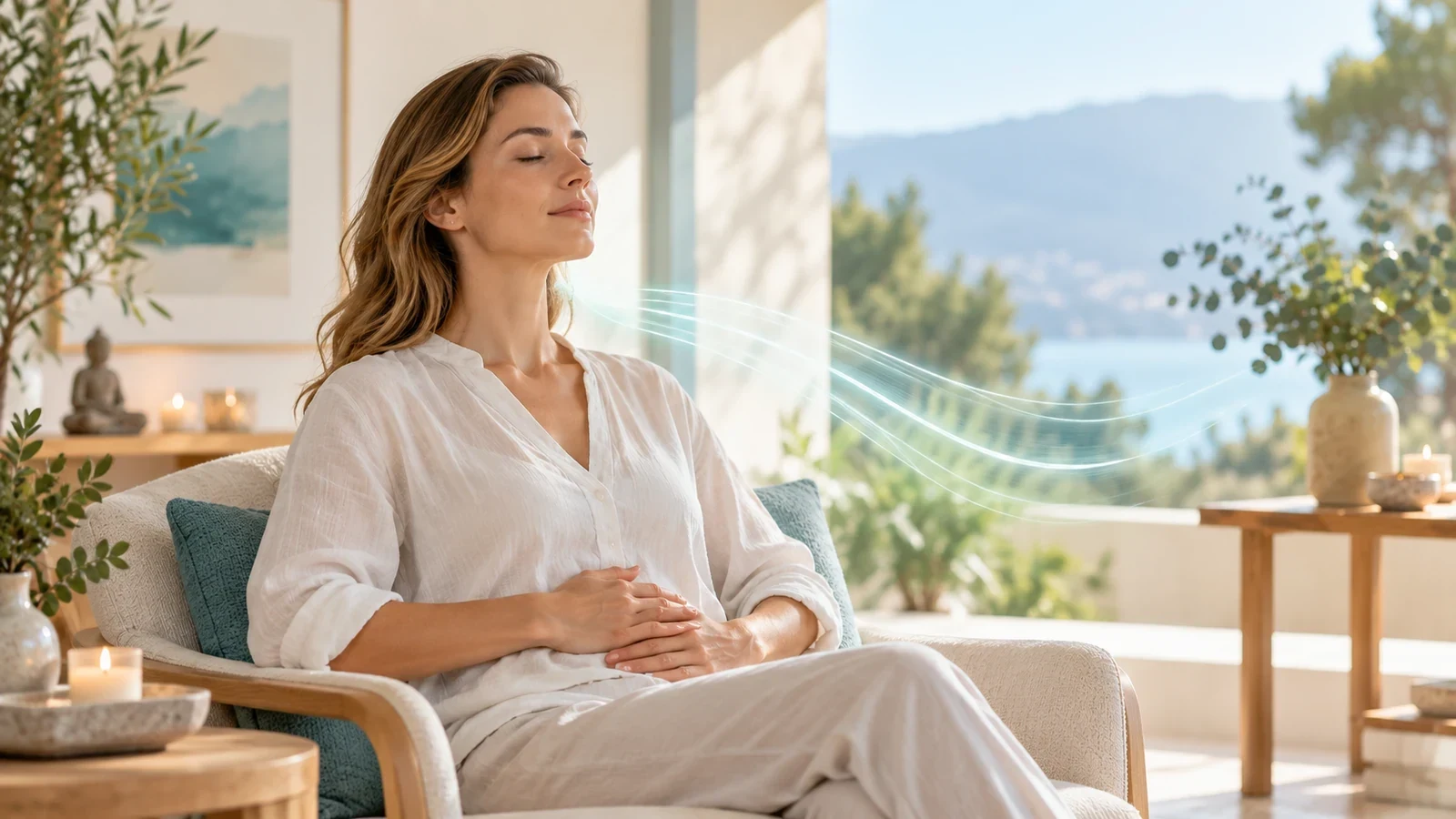
Before or after a biotherapy session, many people want a simple routine that helps them slow down, settle their attention, and notice how they feel. In that context, gentle breathing and relaxation practices can be useful—not as a way to diagnose disease or measure an “energy result,” but as a practical support for comfort and self-observation.
The US National Center for Complementary and Integrative Health (NCCIH) describes relaxation techniques as practices that can help bring about the body's relaxation response, associated with slower breathing and reduced physiological arousal. Mindfulness and meditation are also used by many people to support overall wellbeing.
This guide explains how to make a short relaxation routine part of the time surrounding a biotherapy session. It does not claim that breathing exercises can diagnose disease, prove a biotherapy session was successful, or replace medical treatment.
Why make room for a short pause?
People often arrive for a session distracted, rushed or physically tense. A short transition can offer a more comfortable starting point. After the session, a few quiet minutes may make it easier to notice ordinary experiences without immediately returning to work or a stream of messages.
A brief routine can help you notice whether you are tense, reduce everyday distractions and establish a similar starting environment for future sessions. These are wellbeing goals, not medical measurements or evidence of an energy-related effect.
A five-minute routine before the session
Choose a chair or bed where you can rest comfortably. Keep the room at a pleasant temperature. If you are attending remotely, silence notifications and reduce interruptions.
Minute 1 — posture and setting. Sit or lie in a stable, comfortable position. Relax tight clothing if needed. Notice the support beneath your feet, back or shoulders.
Minutes 2–3 — comfortable breathing. Breathe in gently and exhale without forcing the breath. There is no need to take unusually deep breaths or hold your breath. Choose a pace that feels easy and natural.
Minutes 4–5 — attention. Notice your shoulders, jaw, hands and abdomen. Let areas of tension soften where comfortable. If thoughts wander, return your attention gently to your natural breathing. You do not have to empty your mind or achieve a particular feeling.
Different people prefer different relaxation techniques. Some enjoy a short guided visualization or progressive muscle relaxation; others prefer simply sitting quietly. NCCIH describes these approaches but also notes that their evidence and suitability vary by situation.
After the session: observe without over-interpreting
People may feel calmer, more alert, sleepy, emotional or unchanged. A simple check-in can help you observe what actually happened.
- Has your breathing returned to its usual rhythm?
- Do you feel settled, restless, tired or much the same?
- Is there any discomfort that needs attention?
- Would you prefer a short rest, a gentle walk or your normal routine?
Try not to assign every sensation a strong meaning. Feeling calmer after quiet rest is a genuine personal experience, but it does not by itself establish that a condition has been treated.
Relaxation is not proof of clinical effectiveness
Relaxation, expectation, attention and time away from daily demands can all influence how someone feels. That is why a personal impression after a session is not the same as a controlled clinical measurement.
A statement such as "I felt calmer afterwards" is more precise than claiming that a session corrected a medical condition. If you are monitoring a health concern, use the assessment and follow-up recommended by your qualified healthcare professional.
When should you adjust or stop?
A brief, gentle relaxation routine is suitable for many people, but it should never feel compulsory. Stop or simplify the exercise if you feel dizzy, distressed, breathless or otherwise uncomfortable. Certain relaxation or meditation experiences may also be unsettling for people with particular mental-health or trauma histories; choose a method that feels appropriate and seek professional guidance when needed.
Do not use a wellness routine to delay medical assessment for persistent, worsening or concerning symptoms. NCCIH recommends discussing complementary practices with healthcare professionals and not using unproven approaches instead of effective conventional treatment.
A simple diary instead of a score
If you want a record of your sessions, write down the date, the type of session, whether you used a relaxation routine, one or two personal observations, and any question you want to discuss with your practitioner or clinician.
Avoid turning this into an unsupported numerical diagnosis. Consistent notes can help you explain your experiences, but they do not verify an energy measurement or establish therapeutic efficacy.
Keep expectations realistic
Short relaxation practices are accessible and inexpensive ways of supporting personal comfort and self-awareness. They may fit naturally around a biotherapy appointment as optional complementary activities. Keep their role clear: supportive, reflective and distinct from medical diagnosis or treatment.
For related guidance, see preparing for a remote biotherapy session and keeping your healthcare team informed.
*Reviewed 29 October 2026. General educational information; not individual medical advice.*
Biotherapy is complementary support. It does not diagnose illness and does not replace medical advice, medication, examinations or emergency care.
Sources
- Relaxation Techniques: What You Need To Know
- Meditation and Mindfulness: Effectiveness and Safety
- Are You Considering a Complementary Health Approach?